Weather & Altitude
The Appalachian High Country sits atop the oldest mountains in North America, with trail wineries perched between 3,000 and 4,500 feet in elevation — the highest average elevations east of the Mississippi River. This isn't the rolling Piedmont or the humid coast. This is mountain country, where cool nights, crisp mornings, and dramatic seasonal shifts define the landscape and the wine.
Summers are refreshingly cool — while the Piedmont bakes at 95°F, the High Country averages 70–80°F during peak season. Winters bring snow-capped ridges, frozen waterfalls, and cozy tasting rooms. Spring arrives with wildflowers and bud break. And autumn? The Blue Ridge puts on one of the most spectacular fall color shows on earth, and it's harvest time for the wineries.
Why Elevation Matters for Wine
High altitude means greater diurnal temperature swings — warm days and cool nights. Grapes accumulate sugar during the day and preserve natural acidity at night. The result is wines with balanced structure, bright fruit character, and a crispness you won't find in warmer lowland regions. Our winemakers call it "mountain minerality."
Microclimates & Terroir
The High Country isn't one climate — it's dozens. Every hollow, ridge, and river valley creates its own microclimate. A south-facing slope in Banner Elk may ripen fruit two weeks ahead of a north-facing site just a mile away. Elevation changes of 500 feet can shift temperatures by 3–5°F. The Watauga and New Rivers create thermal corridors, and the Blue Ridge escarpment funnels Pacific-like fog patterns through mountain gaps.
The Appalachian High Country AVA
The region holds its own official American Viticultural Area (AVA) — the Appalachian High Country AVA, recognized by the federal government. Spanning approximately 2,400 square miles across Alleghany, Ashe, Avery, Mitchell, and Watauga Counties in North Carolina (plus parts of Tennessee and Virginia), it's defined by its exceptional elevation, steep slopes (many exceeding 30 degrees), and distinctive granite-gneiss soils with fine loam.
The Tusquitee-Edneyville soil series that underlies most vineyards here provides excellent drainage on steep hillsides while retaining just enough moisture for vine roots to thrive — a combination that naturally stresses vines into producing smaller, more intensely flavored grapes.
What Makes It Different
- Highest vineyards east of the Mississippi — up to 4,630 ft
- Cool-climate growing — comparable to northern France and Germany
- Dramatic diurnal swings — 25–30°F temperature drops at night
- Ancient soils — granite and gneiss, billion-year-old bedrock
- Natural pest resistance — cold winters reduce disease pressure
Best Grapes, Apples & Varietals
The High Country's cool climate and high elevation favor grape varieties that thrive where others struggle. While the Yadkin Valley excels with warm-climate grapes, our mountain vineyards coax exceptional character from cool-climate varieties — plus heritage apple ciders that trace their roots to the region's earliest settlers.
Chardonnay
NC's #1 vinifera variety performs beautifully at altitude. Mountain Chardonnays here show bright acidity and green apple notes that warmer regions can't match.
Seyval Blanc
A French-American hybrid perfectly suited to mountain conditions. Crisp, citrusy, and winter-hardy — a trail favorite for its refreshing minerality.
Traminette
A Cornell-bred cross with Gewürztraminer genetics. Aromatic, floral, with spice notes — and cold-hardy enough to survive High Country winters.
Marquette
Developed at the University of Minnesota to survive extreme cold. Produces deep, complex reds with cherry and black pepper notes at our elevations.
Cabernet Franc
The mountain red. Cabernet Franc thrives in cooler conditions, producing wines with herbal complexity and elegant tannins at High Country altitudes.
Mountain Apples & Ciders
Watauga and Ashe Counties have grown apples since the 1800s. Heritage varieties like Virginia Beauty and Winesap make exceptional hard ciders — a tradition Mill Camp Wines & Ciders carries forward today.
Also Grown on the Trail
Vidal Blanc — ice wine potential at our altitudes. Norton/Cynthiana — America's native red grape, with deep color and big tannins. Chambourcin — a versatile French-American hybrid for rich, food-friendly reds. Muscadine — the native Southeastern grape, grown on selected warm-slope sites where conditions allow. And fruit wines from local blueberries, blackberries, and cherries that showcase the region's bounty beyond the vine.
Wildlife of the Blue Ridge
The mountains surrounding our trail wineries are among the most biodiverse ecosystems in North America. The Blue Ridge Parkway corridor alone protects habitat for over 2,000 plant species and hundreds of wildlife species. Keep your eyes open between tasting stops — the wild residents are part of the experience.
Black Bears
The NC mountains are home to one of the densest black bear populations in the Southeast. They're commonly spotted along the Blue Ridge Parkway, especially during berry season (June–September). Keep a respectful distance and secure your picnic supplies!
Eastern Mountain Lion (Panther)
The elusive mountain lion — also called the panther or cougar — is rarely seen but still roams the remote hollows and ridges of the High Country. Occasional sightings and trail-cam photos confirm their presence in the deep forests of Ashe, Watauga, Alleghany, and Avery counties. Consider yourself lucky if you spot one.
Peregrine Falcons
Once endangered, peregrine falcons have returned to nesting sites on High Country cliff faces. The fastest animal on earth (diving speeds over 200 mph), they hunt from the same granite outcrops that define our mountain skyline.
Salamanders
The southern Appalachians are the "Salamander Capital of the World," with more species than anywhere else on the planet. Over 30 species live in the streams and forests surrounding our wineries — a sign of the region's pristine water quality.
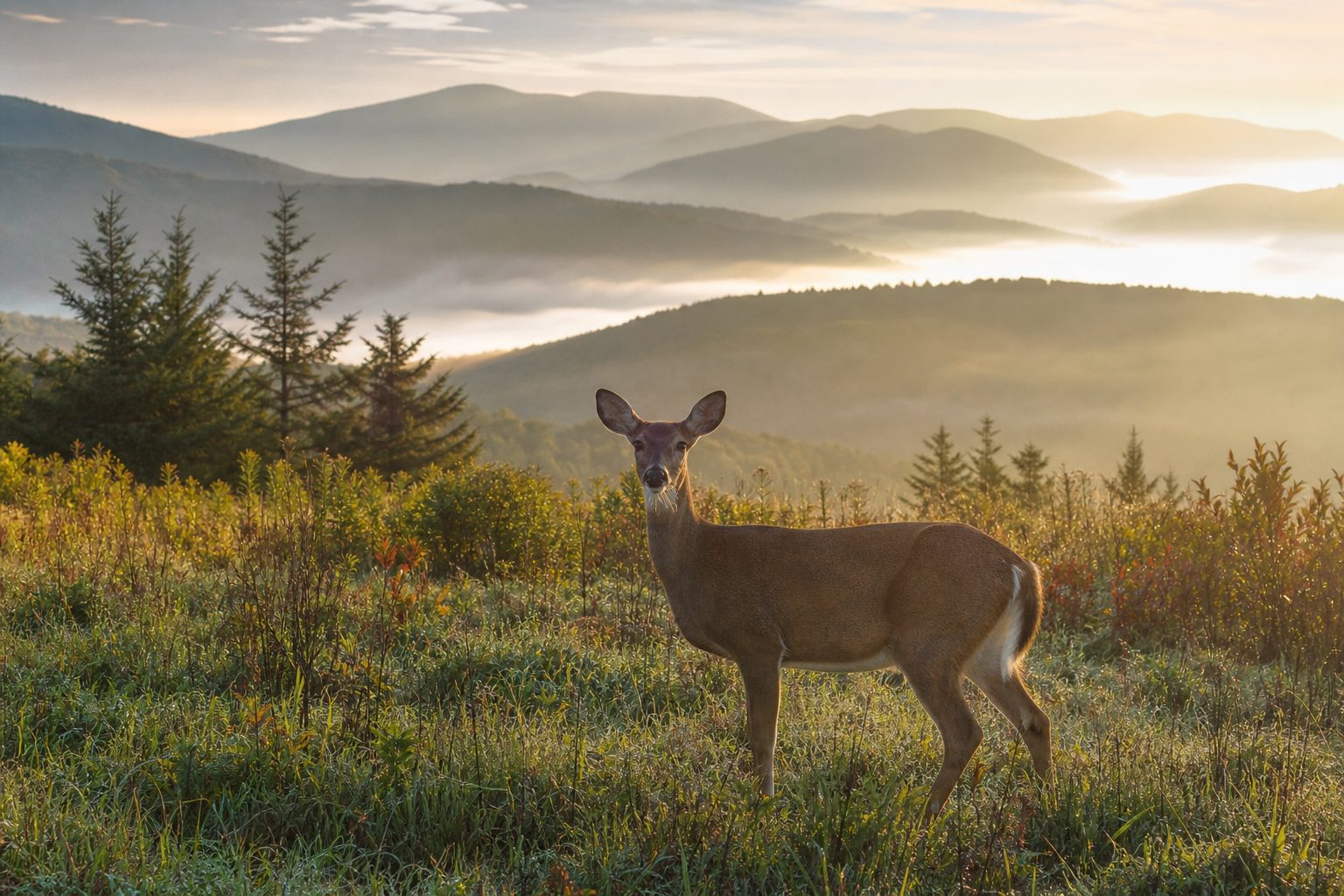
White-Tailed Deer
The undisputed stars of High Country wildlife. White-tailed deer are everywhere — bounding through meadows at dawn, grazing at vineyard edges, and crossing mountain roads at dusk. Hunters travel from across the Southeast for deer season, and year-round visitors are almost guaranteed sightings on the scenic drives between wineries.
Raptors & Songbirds
Red-tailed hawks, barred owls, and dozens of warbler species fill the mountain forests. The High Country sits along major migration routes, making spring and fall birding exceptional — bring binoculars to your winery visits.
Christmas Tree Country
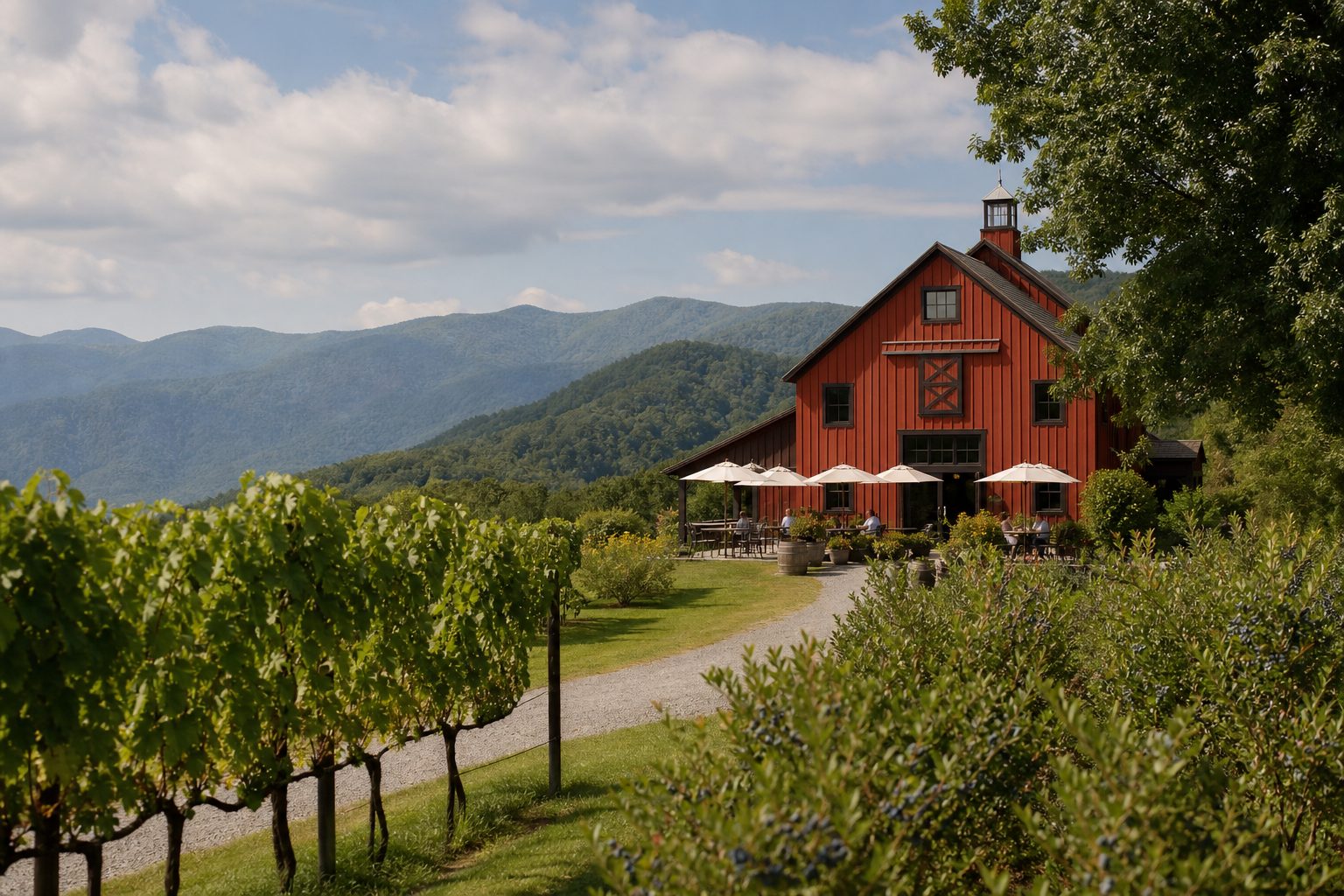
The High Country isn't just wine country — it's the Christmas tree capital of the East. The same cool mountain climate, rich soil, and high elevation that make great grapes also produce the finest Fraser firs in the world. Ashe, Watauga, Alleghany, and Avery counties are among the top Christmas tree producing regions in the entire United States, with thousands of acres of choose-and-cut farms dotting the landscape.
A Year-Round Tradition
From Thanksgiving through Christmas, the mountains come alive with families hunting for the perfect tree. Many of the same farming families who grow grapes also grow Fraser firs — Old Barn Winery doubles as Frosty's Choose and Cut, and Linville Falls Winery operates the Red Barn Tree Farm. It's a living connection between mountain agriculture and the winery experience.
If you visit the wine trail in summer, you'll drive past millions of young Fraser firs growing in neat rows on mountainsides. Come back in November or December, and those same farms transform into festive wonderlands with hot cider, hayrides, and the scent of fresh-cut pine filling the mountain air.
Plan a Winter Visit
Combine a choose-and-cut Christmas tree outing with a winery visit. Several trail wineries stay open through autumn and into December with reduced hours. It's the perfect mountain weekend: find your tree in the morning, warm up with a wine tasting in the afternoon.
Tree season: Late November – mid December
Key counties: Ashe · Watauga · Alleghany · Avery
The Scotch-Irish & the Lost Province
The story of High Country wine begins not with grapes, but with a people. The Scotch-Irish (Ulster Scots) were the largest ethnic group to settle the Carolina backcountry in the 18th century. Fiercely independent, hardened by generations in Ulster, they were the pioneers who crossed the Blue Ridge and Allegheny Mountains in the late 1700s — settling the remote valleys of what is now Ashe, Watauga, Avery, and Alleghany Counties.
They brought with them a tradition of self-sufficiency, small-scale farming, and fermentation. While whiskey gets the historical spotlight, these settlers also made fruit wines, meads, and hard ciders from the wild bounty of the mountains. Apple orchards, berry patches, and wild grapes provided the raw materials for a mountain winemaking tradition that predates any commercial vineyard.
"The Lost Province"
Ashe County — the heart of our wine trail — was so remote and isolated from the rest of North Carolina that it earned the nickname "The Lost Province." Cut off by rugged mountain ridges on all sides, the county's residents were largely self-governing and self-sustaining well into the 20th century. The name speaks to a fierce independence that still defines the culture here. Today's winemakers carry that same spirit: small-batch, hands-on, and deeply rooted in the land.
Scotch-Irish settlers begin crossing the Blue Ridge into present-day Ashe and Watauga Counties. They establish farms in remote mountain valleys, growing corn, apples, and raising livestock.
Ashe County is officially formed, named after Governor Samuel Ashe. Its remoteness earns it the nickname "The Lost Province" — the county is weeks of travel from the state capital.
Mountain families cultivate apple orchards and harvest wild grapes, producing hard ciders and fruit wines for personal use. The tradition of mountain fermentation takes root.
Construction begins on the Blue Ridge Parkway, eventually connecting the High Country to the rest of the Southeast and opening the door for tourism.
Commercial wineries begin establishing vineyards in the High Country, recognizing the unique terroir. Banner Elk Winery, Grandfather Vineyard, and others pioneer mountain viticulture.
The Appalachian High Country AVA is officially recognized by the federal government, validating the region as a distinct and significant American wine-growing area.
The region's seven mountain wineries are increasingly promoted together as a single destination — the Appalachian High Country Wine Trail — drawing visitors who once drove past on their way to the Parkway.
The Blue Ridge Parkway
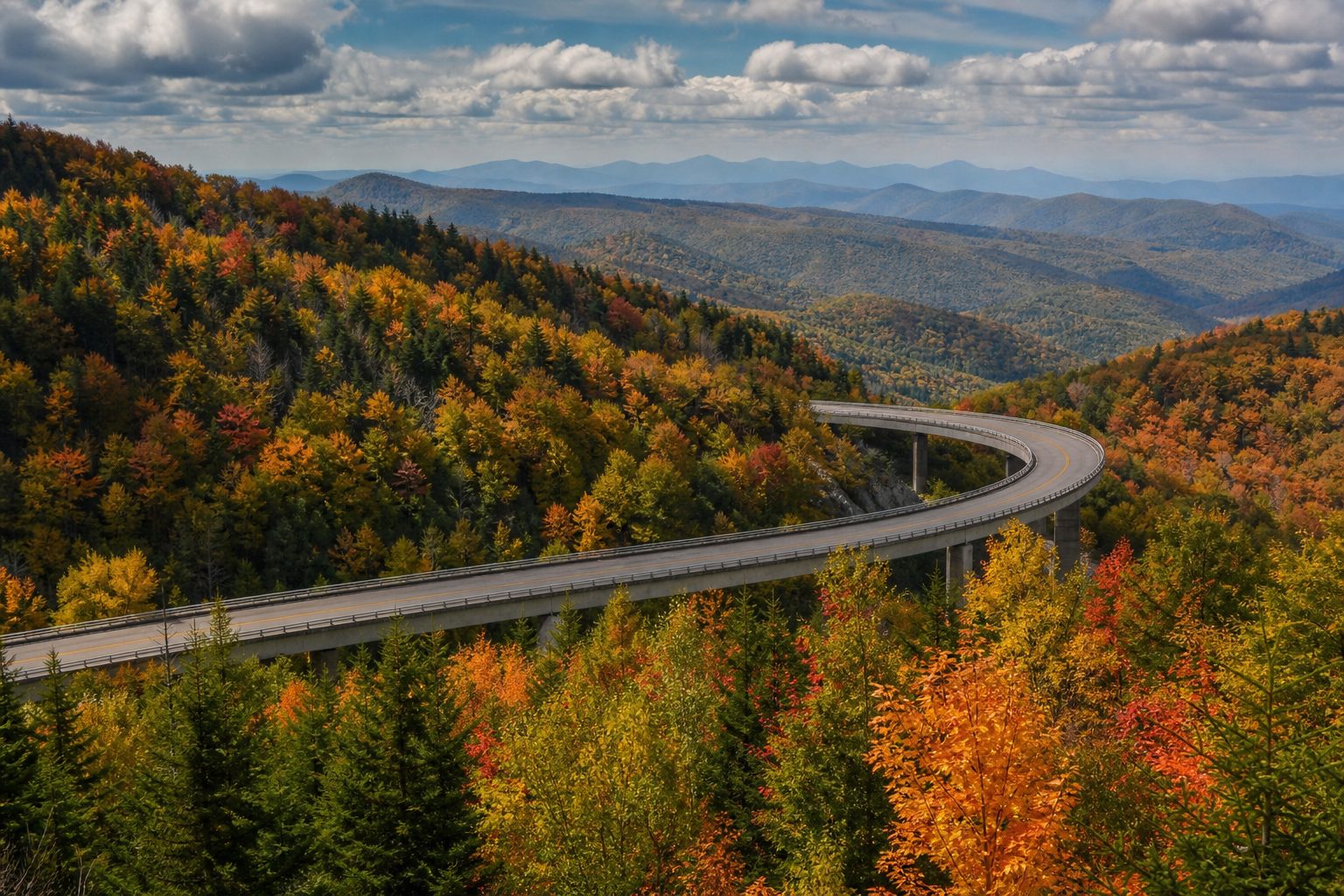
America's most visited national park unit — the Blue Ridge Parkway — winds 469 miles along the spine of the Appalachian Mountains, and the High Country wine trail sits right in the heart of its North Carolina section. Several trail wineries are just minutes from Parkway access points, making a wine trail visit the perfect complement to a Parkway drive.
Wine Trail Parkway Connections
- Milepost 305.1 — Linville exit, minutes to Grandfather Vineyard & Winery
- Milepost 317.4 — Linville Falls Winery, just ½ mile off the Parkway
- Milepost 260–270 — Access to Banner Elk and Eagles Nest via Hwy 184/Hwy 105
- Milepost 238–248 — Access to West Jefferson, Old Barn Winery, and Thistle Meadow via US-421/NC-163
Parkway Highlights Near the Trail
- Linn Cove Viaduct — engineering marvel hugging Grandfather Mountain
- Linville Falls — dramatic two-tier waterfall, short hike
- Moses Cone Manor — the "Flat Top Manor" with craft gallery
- Julian Price Park — lake, camping, and hiking at 3,400 ft
- E.B. Jeffress Park — the Cascades Trail and cool mountain picnicking
The New River
Winding through the heart of our wine trail region, the New River is one of the oldest rivers in the world — and one of the most misnamed. Despite its name (given by explorers who stumbled upon it in "new" territory in 1749), geologists estimate the New River is between 10 million and 360 million years old, making it possibly the second-oldest river on earth after the Nile.
The New River is also one of the few major rivers in the continental United States that flows north — rising from the Blue Ridge Mountains of Watauga and Ashe Counties, flowing through Virginia, and eventually joining the Kanawha River in West Virginia. In 1976, 26 miles of the South Fork were designated a National Scenic River, and New River State Park protects pristine stretches of its banks.
For visitors to the trail, the New River adds another dimension to the experience. Grandfather Vineyard & Winery sits along the Watauga River, a tributary of the New. The river's gentle thermal influence creates favorable microclimates in the valleys it carves through the mountains.
Between winery visits, the New River offers world-class canoeing, kayaking, tubing, and fly fishing. Outfitters in West Jefferson and Boone can set you up for a morning on the water before an afternoon of wine tasting. Mill Camp Wines & Ciders is just minutes from popular New River access points north of Boone.
New River Quick Facts
- Age: 10–360 million years old
- Direction: Flows north (rare in the US)
- Length: 360+ miles to the Kanawha
- Protection: National Scenic River (1976)
- State Park: New River State Park (NC)
- Activities: Canoeing, kayaking, tubing, fly fishing